Planetary Analogs & Cognitive Terrain
Adapting Cognitive Frameworks for Terrain Comprehension & Mission Readiness in Disorienting Contexts, Extreme Environments, & Off-Planet Scenarios
Ongoing
Custom Psychological Protocols
Disorientation is a risk to mission success. Whether in remote habitats, subsurface mines, analog space environments, or unfamiliar operational theaters, orientation breaks down when teams face the unfamiliar, whether spatial, temporal, procedural, or social.
I work with teams operating in or preparing for:
Space analog missions
Subsurface or confined environments (mining)
Remote scientific or industrial operations
Expeditionary training and mission simulations
I help clients design training environments, team protocols, and spatial schemas that preserve efficiency, reduce risk, and maintain decision clarity under uncertainty.
When teams can’t reconcile what they see, feel, or do with where they are and what’s happening, their cognitive continuity breaks down. Mission success is often less about technical capability and more about cognitive continuity.
I’ll work with you to design a protocol engineered to reduce:
Cognitive drift
Procedural collapse
Situational blindness
Overconfidence in distorted frames
Whether you’re building a habitat, staging a simulation, or planning operations in unfamiliar hostile terrain, I help you design for how humans actually operate when orientation breaks down.
I don’t offer plug-and-play training modules. If you work with me, I’ll prep by eliciting requirements, then move to build a model of the operational activities and contextual environmental conditions, and then we’ll design a collaborative orientation system rooted in your mission profile, constraints, and real-world context with your feedback along the way. Everything I do is custom.
Orientation is an asset
Operational Context

path design as perception-training machines
All planetary analogs are perception-training machines, whether they are purpose built, found, or simulated. That makes design a form of cognitive engineering, and they can be used to train cognitive agility in high-stakes, low-familiarity spaces where teams must read, decide, and adapt under disorienting conditions.
Through site-specific installations, terrain rehearsals, perception calibration, and route optimization, I prepare individuals and teams to navigate cognitively disorienting environments.
I am NIH-certified to conduct research on human subjects and experienced in IRB-aligned methodologies, and I bring an informed and ethical approach to cognitive ethnography, positioning my work for seamless adaptation into mission-critical training environments that demand precision, psychological insight, and operational acuity.
Have a situation you’re training for?
Cognitive Performance Layer
Earlier in my career, I led knowledge discovery for systems modeling on a U.S. Navy ship readiness project that achieved a 67% increase in operational efficiency. That experience sharpened my ability to align mission demands with both cognitive clarity and structural precision in high-stakes scenarios.
Today, I build on my own research in embodied cognitive science to develop models for use in ISRU rehearsal environments, cognitive systems design & training infrastructure, and performance-driven landscape interpretation.
When you work with me to co-design a protocol for optimizing mission readiness, you’re accessing a skillset grounded in real-world fieldwork, original cognitive science research, and proven results in optimizing complex-adaptive systems for success in high-consequence environments. Whether you’re preparing teams for space analogs, underground operations, or unfamiliar terrain, I bring the tools to help you anticipate disorientation, maintain focus, and stay on mission when it counts. Contact me today.
My current work supports cognitive readiness, perceptual performance, and terrain comprehension in high-consequence environments, especially where interpreting unfamiliar landscapes under pressure is mission-critical.
These frameworks emerged from original research during two appointments as a visiting researcher in cognitive science at Case Western Reserve University (2012-2015), and build on over a decade of fieldwork in embodied cognition and spatial reasoning.
I formalized this approach in A Sense of Space (CWRU, 2012) and expanded it in Hack the Experience (Punctum Books, 2018), where I developed training models using conceptual metaphor theory, multi-modal integration, and embodied conceptual blending. These aren’t poetic metaphors, but precise cognitive mappings between sensory-motor experience and abstract reasoning. They’re essential tools for real-time decision-making in disorienting environments.

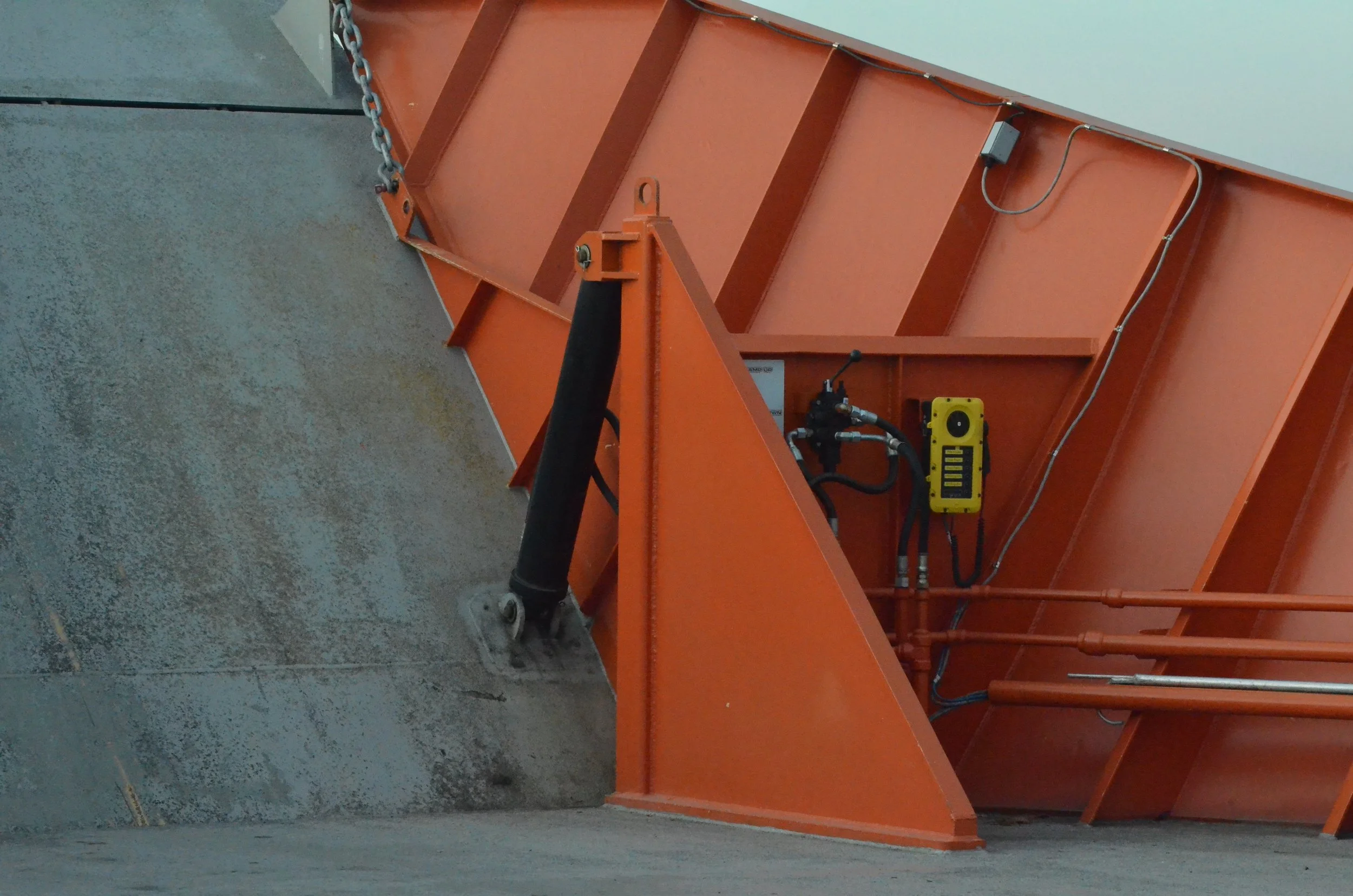
Origins: I captured this image during a descent into Cargill’s salt mine beneath Lake Erie, a formative fieldwork experience that shaped my approach to terrain comprehension, conceptual grounding, and human performance in disorienting environments. While not a prototype site, it helped clarify how the Great Lakes region operates as a mineral horizon, shaped by layers of extraction logic across time. That perspective continues to inform my work on planetary analogs and the development of adaptive cognitive frameworks for high-stakes missions in unfamiliar landscapes.