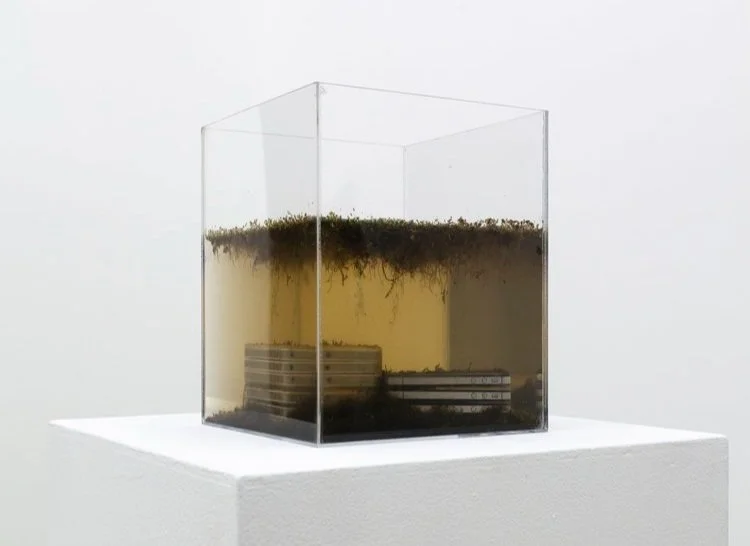
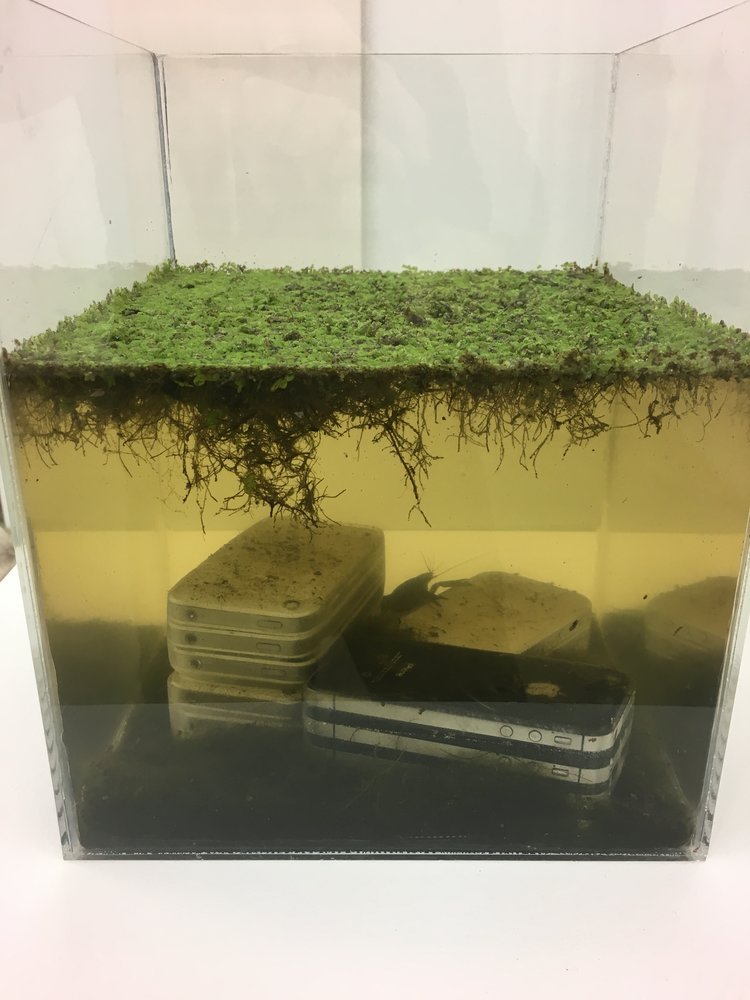
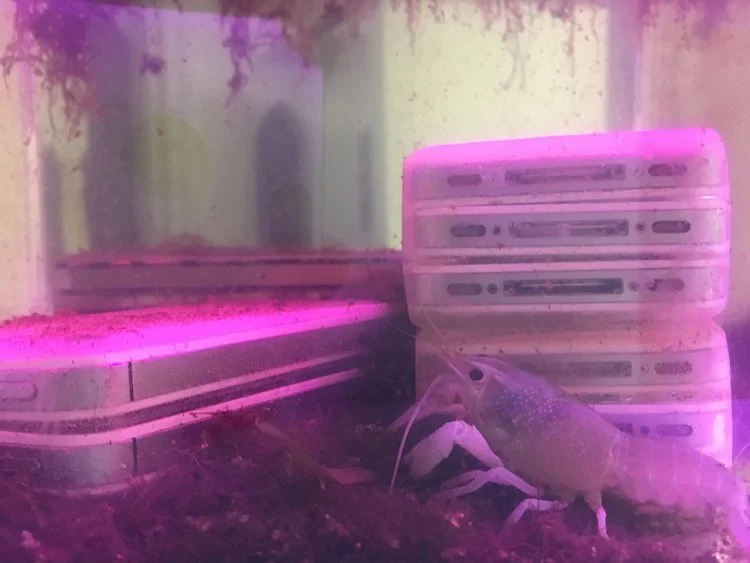

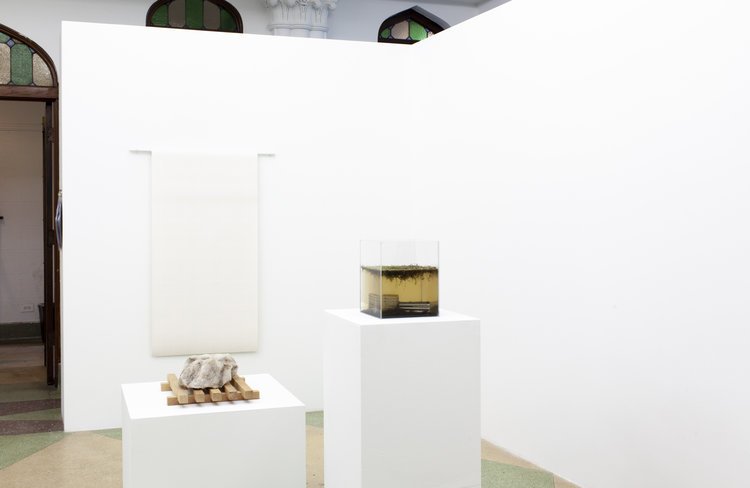
Infinite Resource draws together three distinct systems of exponential replication, biological, botanical, and technological, to explore how abundance functions as a planetary force. During the Eocene, a floating fern called azalla blanketed the Arctic Ocean in green, seasonally drawing down vast volumes of atmospheric carbon (6.6 tons per acre each summer for 800,000 years) eventually triggering the shift into Earth’s icehouse state. Meanwhile, in a pet store supply chain, two crayfish from different regions spawned a daughter capable of parthenogenesis: a self-replicating individual now dispersed across the planet, a single organism infinitely copied, swimming here. And in a different domain of reproduction, Apple released the iPhone 4S before demand for the 4 had evened softened, doubling its three-day sales record. Siri, the first-generation referent of the S-series, initiated a cascade of voice-activated replication across devises. In this work, the accumulation of azalla, the global spread of a single crayfish clone, and the marketing cadence of smartphones are treated as instances of infinite resource behavior, replication that outpaces need, folds in on itself, and reconfigures the substrate it inhabits.
-
DATE: 2018
MATERIALS: water, Azolla filiculoides, Procambarus virginalis, iPhone 4S, acrylic tank
SCALE: object
DIMENSIONS: 28 x 23 x 23cm
SITE: n/a
STATUS: complete
-
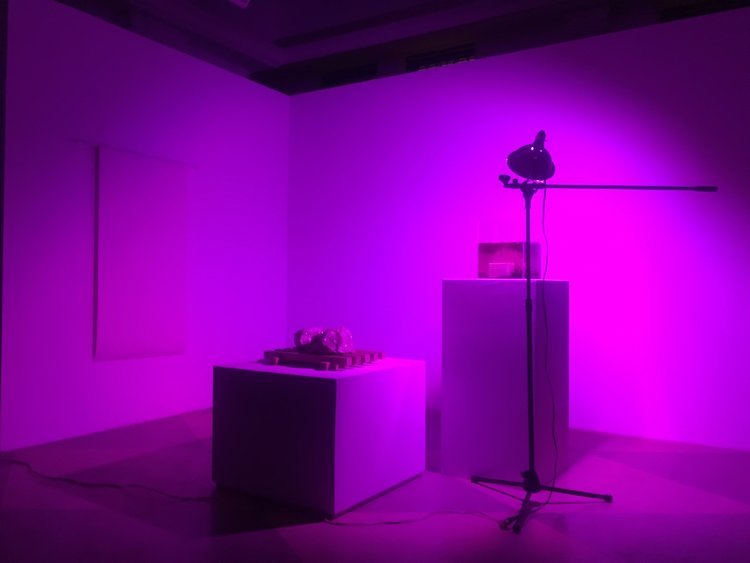
A Shadow As A Stain, (2018, group exhibition) ACRE Projects, Chicago.
Animal handling provided by Aquamoon